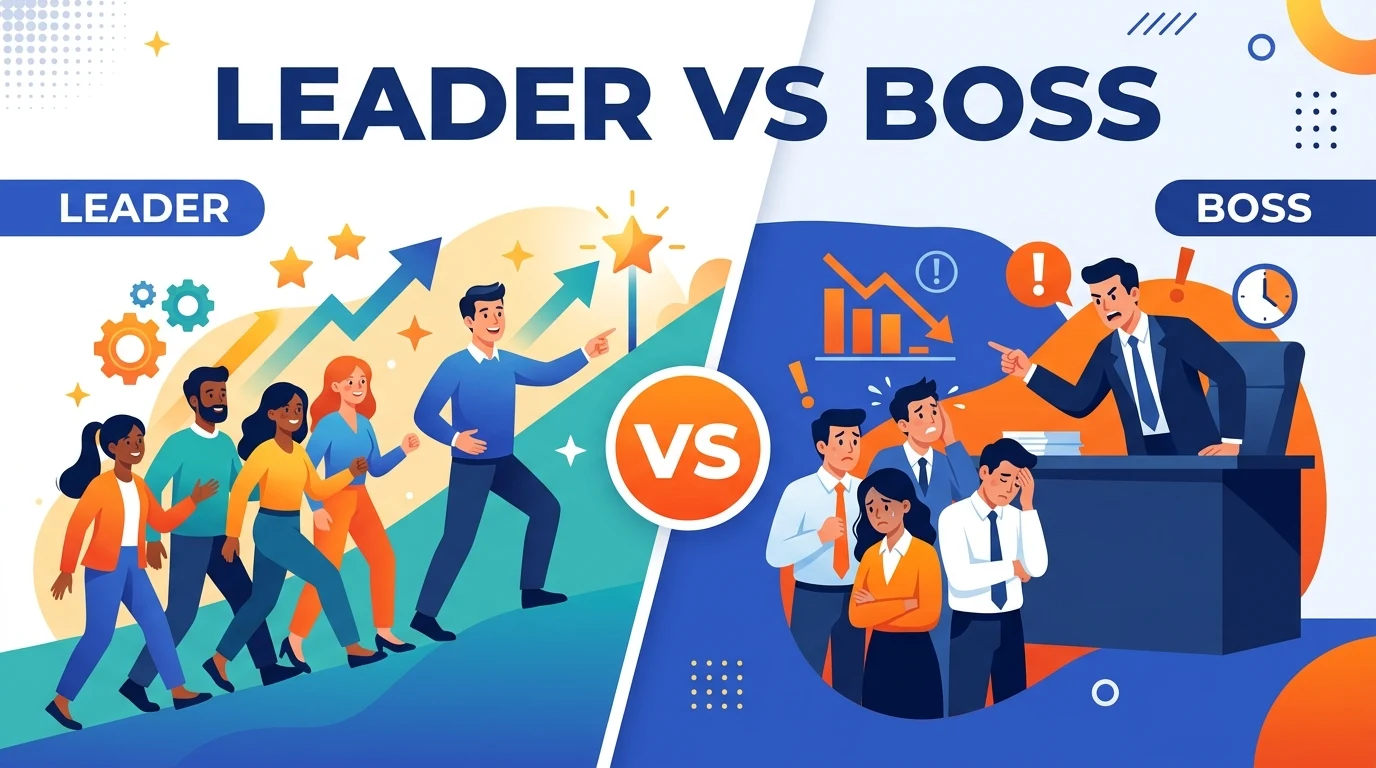
A boss manages people through authority and control. A leader guides people through influence and inspiration.
The difference is not about job titles. It is about mindset and behavior. Anyone with a title can be a boss, but leadership is earned through how you treat people every day. Here are the 10 key differences, and how to become the kind of person others actually want to follow.
What Is a Boss?
A boss is someone who holds a position of authority and uses it to direct work. Bosses focus on tasks, deadlines, and results, often through top-down instructions.
The typical boss style is authoritarian: delegate the task, expect it done, and measure everything. This can produce short-term results, but it often limits creativity and drains motivation.
A boss is in charge of the workflow. But being in charge is not the same as being followed.
What Is a Leader?
A leader is someone who influences and motivates others toward a shared goal. Leaders build trust, communicate clearly, and invest in the growth of each team member.
Leaders guide by example. They encourage feedback, share credit, and take responsibility when things go wrong. Their focus is not just on getting the job done, but on how it gets done and who the team becomes in the process.
Here is the important part: leadership is not a title. A team member with no authority can be the person everyone turns to for guidance. That is leadership without a position.
Leader vs Boss: 10 Key Differences
Focus: a boss focuses on tasks and results. A leader focuses on people and their development.
Authority: a boss relies on positional power to get things done. A leader earns respect through integrity and vision.
Communication: a boss uses one-way communication, giving instructions without listening. A leader builds two-way dialogue and genuinely welcomes input.
Accountability: a boss blames others when things fail. A leader takes the blame first and looks at what they could have done better.
Decision-making: a boss decides alone and announces the verdict. A leader involves the team and values different perspectives.
Mindset: a boss believes they already know it all. A leader keeps a growth mindset, open to new ideas and willing to learn.
Motivation: a boss pushes people with pressure and rules. A leader pulls people forward with encouragement and purpose.
Feedback: a boss gives critical, discouraging feedback. A leader gives constructive feedback that helps people grow.
Example: a boss makes an example out of people who fail. A leader sets an example worth following.
Success: a boss takes personal credit for wins. A leader celebrates success with the whole team.
Signs You Are Working for a Boss, Not a Leader
Meetings feel like lectures: information flows one way, and questions feel unwelcome.
Mistakes are punished, not studied: people hide errors instead of learning from them.
Credit flows upward: your wins become their wins, but failures somehow stay yours.
Ideas die quietly: suggestions are ignored, so people stop offering them.
Everyone watches the clock: engagement is low because nobody feels ownership of the work.
If three or more of these sound familiar, you are dealing with a boss. The good news: bosses can become leaders. It starts with self-awareness.
How to Become a Leader Instead of a Boss
Listen before you speak: in your next meeting, ask two questions before giving one instruction. Listening builds trust faster than any speech.
Share the why: people work harder when they understand the purpose. Explain why the task matters, not just what to do.
Give credit publicly: name the people behind the win. Recognition costs nothing and buys loyalty.
Own your mistakes: the next time something fails, say what you would do differently before evaluating anyone else.
Coach instead of criticize: replace “this is wrong” with “here is how to make it stronger.” Same message, completely different effect.
Invest in growth: ask each team member what skill they want to build this year, then help them build it.
None of this requires a promotion. It requires a decision to treat people as partners instead of resources.
Leader vs Boss in Everyday Situations
A deadline is missed: the boss asks who is responsible. The leader asks what went wrong in the process and how to fix it.
Someone pitches a new idea: the boss says we have always done it this way. The leader says interesting, let us test it.
The team hits a big goal: the boss reports the win upward as their own achievement. The leader names every contributor in the celebration.
Feedback time: the boss lists everything you did wrong. The leader highlights one strength to build on and one area to improve.
Someone is struggling: the boss adds pressure and watches closer. The leader asks what support the person needs and removes obstacles.
A tough decision looms: the boss decides alone and announces it. The leader gathers input first, then decides and explains the reasoning.
Notice the pattern. The boss protects their position. The leader protects the team. People remember which one you chose.
Can One Person Be Both?
Yes, and most good managers are. Every manager needs enough authority to keep work moving, and every leader needs basic management skills to stay organized.
In small teams, one person often wears multiple hats: setting vision like a leader, tracking tasks like a manager, and making final calls like a boss. That is normal and healthy.
The skill is knowing which mode to use when. Use authority for urgent decisions and clear accountability. Use leadership for everything that involves people, motivation, and growth.
The danger is getting stuck in boss mode permanently. Authority is a tool, not an identity.
People Also Ask
What is the main difference between a leader and a boss?
A boss manages through authority and control, focusing on tasks and results. A leader guides through influence and inspiration, focusing on people and their growth.
Can a boss also be a leader?
Yes. The best managers combine both. They use authority when quick decisions are needed and leadership when motivating and developing people. The key is knowing which mode fits the moment.
What are the qualities of a good leader?
Good leaders are transparent, accountable, and open to learning. They communicate both ways, give constructive feedback, empower their team, and measure success by the team’s achievements, not just their own title.
Why do employees prefer leaders over bosses?
Leaders make people feel valued, heard, and trusted. Teams led by true leaders are more engaged, creative, and loyal, while boss-led teams often comply without commitment.
How do I stop being a boss and start being a leader?
Start with listening more and instructing less. Take blame before assigning it, share credit generously, and coach instead of criticize. Small behavior changes compound into a leadership reputation.
Is it bad to be a boss?
Not necessarily. Authority has its place: clear decisions, accountability, and urgent situations all need someone in charge. It becomes a problem only when control replaces trust as the default style.
What is the difference between a manager and a leader?
A manager focuses on systems, processes, and short-term goals. A leader focuses on vision, people, and long-term direction. Great organizations need both, and the best people blend the two.
Conclusion
Leader vs boss is not a battle of titles. It is a choice of how you show up for the people around you. Bosses demand respect through position. Leaders earn it through trust, example, and genuine care for their team’s growth.
The encouraging truth is that leadership is a skill, not a gift. Listen more, blame less, share credit, and coach with patience. Do that consistently, and people will follow you not because they have to, but because they want to be inspired.

I am a detail-oriented writer passionate about digital content creation.
I focus on producing clear, engaging, and reader-friendly articles.
I proudly contribute to dreamunionz.com as a committed content author.