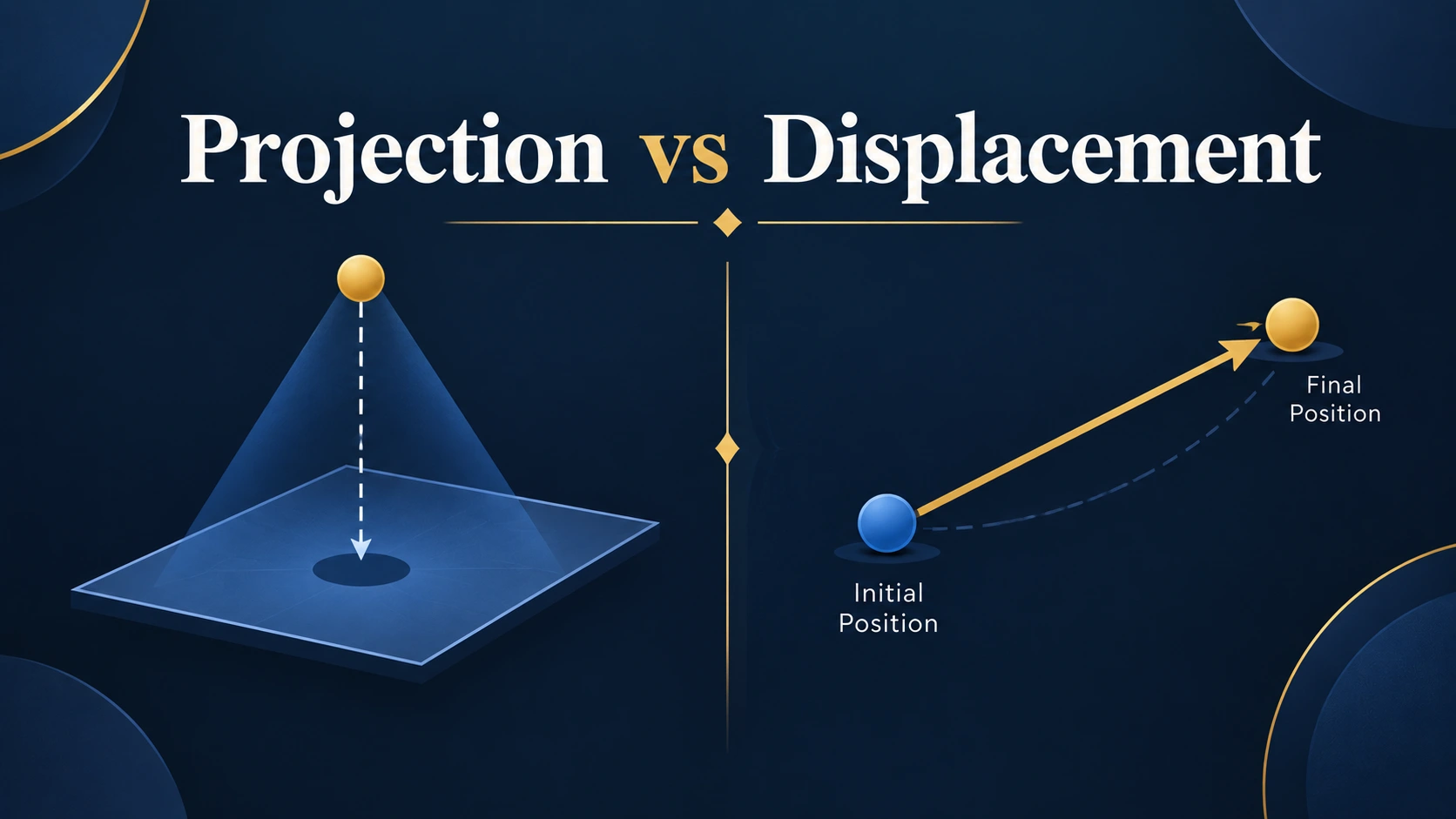
Projection means attributing your own unwanted feelings to someone else, while displacement means redirecting your emotions from their real source to a safer target. Here is how to tell them apart.
Projection vs Displacement at a Glance
Projection
What moves: your traits onto others
Direction: self to other person
Example: you gossip, then accuse a friend of gossiping
Core idea: “They are like this”
Protects from: admitting your own flaws
Displacement
What moves: your emotions to a new target
Direction: one target to a safer one
Example: angry at your boss, you snap at family
Core idea: “I need an outlet”
Protects from: consequences of the real reaction
What Is Projection?
Projection is a defense mechanism where you attribute your own unwanted feelings, traits, or motives to someone else. Instead of admitting “I am hostile,” your mind decides “they are hostile toward me.”
Think of a projector casting an image onto a screen. Your inner quality gets thrown outward, so you see it in others instead of yourself. It happens unconsciously; you genuinely believe the other person is the problem.
What Is Displacement?
Displacement is a defense mechanism where you redirect an emotion from its real source to a safer target. The feeling is real and acknowledged, but expressing it toward the original person feels too risky.
The classic example: you are furious with your boss but cannot say so, so you come home and snap at your family. The anger is yours. Only the target changed.
The Core Difference
Here is the cleanest way to separate them. In projection, the feeling itself is denied and relocated: “I am not angry, YOU are angry.” In displacement, the feeling is kept but the target is swapped: “I am angry, just not at you.”
Projection distorts who has the trait. Displacement changes who receives the emotion. One rewrites reality; the other redirects it.
Projection in Everyday Life
The cheating partner: someone unfaithful becomes convinced their partner is cheating, reading suspicion into innocent behavior.
The office gossip: a person who talks behind backs accuses colleagues of gossiping about them.
The insecure friend: someone who feels boring calls others boring first, before anyone can judge them.
The guilty sibling: feeling bad about not calling home, you decide “they never call me” and feel wronged instead of guilty.
Displacement in Everyday Life
Work to home: criticized by your manager, you argue with your spouse over something trivial that evening.
Parent to child: stressed about bills, a parent yells at the kids for a small mess.
Sports and games: after a humiliating loss, a player kicks the equipment or lashes out at a teammate.
Road rage: already tense from a bad morning, a driver explodes at a minor traffic mistake by a stranger.
How They Affect Relationships
Projection breeds conflict. When you accuse others of your own flaws, conversations turn into arguments about things they did not do. Trust erodes because your partner feels falsely accused.
Displacement breeds confusion. The target did nothing to deserve the outburst, so they feel blindsided and hurt. Over time, loved ones start walking on eggshells, never knowing what mood will arrive home.
Can They Happen Together?
Yes. The two often team up. Imagine disliking your own laziness: you project it by calling your roommate lazy, then displace your frustration about the messy apartment onto your partner.
Recognizing the pair is powerful. Once you see the pattern, you can ask the two key questions: “Is this really about them?” and “Who am I actually upset with?”
A Quick Self-Test
Try this the next time tension rises. Ask yourself three questions before you speak.
1. Am I accusing them of something I do myself? If yes, that is likely projection.
2. Am I actually upset with someone else entirely? If yes, that is likely displacement.
3. What would I say if I were being completely honest? The honest answer is usually the healthy path forward.
This 30-second check interrupts the automatic pattern and gives your rational mind a chance to catch up.
When to Seek Professional Help
Everyone uses defense mechanisms. They become a problem when they damage relationships, happen daily, or leave you feeling stuck and confused about your own emotions.
If you notice constant blame-shifting, explosive reactions at home, or conflicts that never resolve, a therapist can help you trace these patterns to their roots. Asking for help is a sign of self-awareness, not weakness.
Healthier Alternatives
Name the feeling: simply saying “I feel angry” out loud weakens both mechanisms. Labeled emotions are easier to manage.
Address the real source: a calm conversation with your boss beats three days of snapping at everyone else.
Use the trait as a mirror: when you catch yourself accusing someone, ask “Is this something I do?” Honest answers sting but heal.
Channel it safely: exercise, journaling, or talking to a friend gives the emotion an outlet without a victim.
People Also Ask
What is the difference between projection and displacement?
Projection attributes your own feelings to others, while displacement redirects emotions from the original source to a safer target. In projection the feeling is denied; in displacement only the target changes.
What is an example of projection?
Accusing a friend of gossiping about you when you have actually been gossiping about them. The unwanted trait is yours, but you see it in someone else.
What is an example of displacement?
Being angry at your boss but taking it out on a family member at home. The emotion is real; it is just aimed at the wrong person.
Is projection a narcissistic trait?
Everyone projects sometimes. It becomes a concern only when it is constant and rigid, preventing any self-reflection. Occasional projection is a normal human defense.
How do you stop displacing anger?
Pause and trace it. When you feel the surge, ask “who am I actually upset with?” Then address that person or situation directly, or vent through exercise or writing instead.
What did Freud say about defense mechanisms?
Freud proposed that the ego uses unconscious strategies like projection and displacement to protect itself from anxiety caused by unacceptable impulses. Later psychologists expanded and refined his list.
Is displacement always unhealthy?
Not always. Briefly venting frustration through exercise instead of confronting someone in a heated moment can be adaptive. It becomes unhealthy when it is the only coping tool and innocent people keep getting hurt.
How can you tell if someone is projecting onto you?
Look for mismatches. If an accusation feels exaggerated or out of character for you, and the accuser shows the very trait they describe, projection is likely. Calmly naming what you observe can defuse it.
What is the difference between projection and transference?
Transference moves feelings from a past relationship onto a present person, like treating a new boss like a critical parent. Projection moves your own current traits onto someone else. One is about the past; the other is about the self.
Can therapy help with these patterns?
Yes. Therapies that build self-awareness, such as psychodynamic or cognitive behavioral therapy, help people notice projection and displacement in real time and choose healthier responses.
Do children use projection and displacement?
Yes, often. A child who breaks a toy may insist “my sibling did it” (projection), or a child scolded at school may pick a fight with a sibling at home (displacement). Gentle guidance helps them name feelings instead.
Conclusion
Projection vs displacement is simpler than it sounds: projection says “you are the problem”, displacement says “you get the fallout”. Spotting either one in yourself is the first step to handling emotions honestly.
The next time an accusation or an outburst feels off, pause and ask the two questions. A quick look at the psychology of projection can turn a confusing conflict into a moment of real clarity.

I am a dedicated writer who believes in the power of storytelling.
I create thoughtful content that connects with readers on a deeper level.
I contribute my creative work to dreamunionz.com with passion and originality.