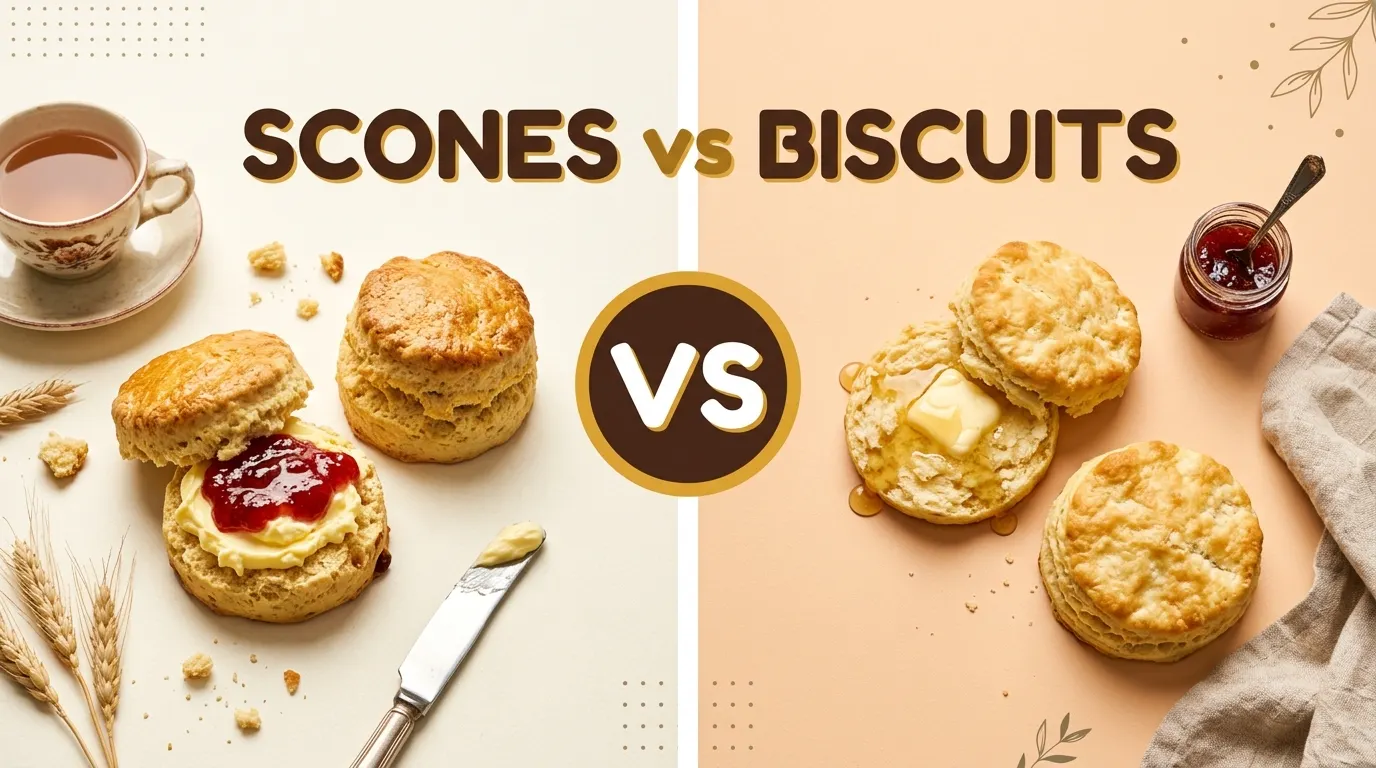
Biscuits are fluffy, flaky, and buttery, usually savory, and served warm with meals. Scones are crumbly, denser, and slightly sweet, served at teatime with jam and cream.
They look like cousins, and honestly they are. Both are quick breads made from flour, fat, liquid, and a leavening agent. But the texture, taste, and tradition behind each one are completely different. Let us settle the debate once and for all.
What Are Biscuits?
An American biscuit is a soft, fluffy, flaky quick bread famous in Southern US cuisine. Think of the warm biscuits served with fried chicken, sausage gravy, or butter and honey.
Biscuits are made with flour, cold butter, buttermilk, baking powder or soda, and salt. They usually contain no eggs and only a tiny bit of sugar, if any. The magic is in the layers: cold fat folded into the dough creates steam pockets that puff up into flaky sheets.
They are round and tall, baked until golden, and best eaten warm. Biscuits belong to the main meal, not dessert. In the South, biscuits and gravy is practically a food group of its own.
What Are Scones?
A scone is a crumbly, slightly dense baked good with British roots. In the UK, scones are the star of afternoon tea, served with jam and clotted cream.
Scones are made with flour, butter, milk or cream, sugar, eggs, and baking powder. Compared to biscuits, they contain more sugar and often eggs, which gives them a richer, sturdier crumb.
They are often cut into triangles, squares, or rounds and loaded with add-ins: blueberries, chocolate chips, dried fruit, nuts, cheese, or herbs. Scones can be sweet or savory, and they are served with tea or coffee, warm or at room temperature.
Fun fact: the American coffee-shop scone, the triangular one stuffed with chocolate chips, is sweeter and richer than a traditional British scone.
Scones vs Biscuits: Key Differences
Texture: biscuits are flaky, light, and airy. Scones are crumbly, dense, and sturdy.
Taste: biscuits taste buttery and savory. Scones taste sweet and creamy.
Eggs: biscuits traditionally have no eggs. Scones usually include eggs.
Sugar: biscuits have little to no sugar. Scones contain noticeably more sugar.
Fat: biscuits rely on cold butter and buttermilk for flakiness. Scones use butter plus cream for richness.
Shape: biscuits are round and tall. Scones are often triangles, squares, or rounds.
When served: biscuits go with a meal. Scones go with tea or coffee.
Toppings: biscuits get gravy, butter, or jam. Scones get clotted cream, jam, and butter.
Origin: biscuits come from the American South. Scones come from Scotland and England.
Wait, What Does Biscuit Mean in the UK?
Here is the twist that confuses everyone. In the UK, the word biscuit means something Americans call a cookie. A British biscuit is crisp, sweet, and dunked in tea.
So if a British recipe says biscuit, it means cookie. If an American recipe says biscuit, it means the fluffy bread. The closest British equivalent to an American biscuit is actually a scone.
This is why the comparison gets messy online. Always check which country’s recipe you are reading before you start baking.
How Scones Became Two Different Breads
Scones originated in the British Isles centuries ago. When British settlers brought them to America, the recipe split in two based on local ingredients.
In the South, bakers used easily available buttermilk, lard, and soft wheat flour. The result was lighter and fluffier, and it became known as the biscuit.
In the North, bakers used harder wheat along with heavy cream, eggs, and sugar. That version kept the name scone and turned into the sweet, rich pastry Americans know today.
Both are children of the same British ancestor. They just grew up in different kitchens.
When to Serve Each One
Serve biscuits when the meal needs something warm and comforting. They shine next to fried chicken, breakfast sausage, country gravy, or a bowl of soup. Split one open, add butter, and watch it melt into the layers.
Serve scones when it is time for something a little special. They belong at bruncheons, afternoon tea, and coffee breaks. In Cornwall, the classic cream tea is a scone with jam and clotted cream, and locals will happily argue about which goes on first.
Rule of thumb: biscuits feed the meal, scones make the moment.
Popular Variations to Try
Buttermilk biscuits: the Southern classic. Tangy buttermilk makes them extra tender and tall.
Cheddar biscuits: sharp cheddar folded into the dough. Savory, golden, and dangerously good warm.
Drop biscuits: no rolling or cutting. The wet dough is simply dropped onto the pan, giving a rustic, craggy crust.
Fruit scones: studded with blueberries, cranberries, or currants. The British teatime favorite.
Cheese and herb scones: the savory scone. Cheddar, chives, and a little black pepper turn teatime into snack time.
Chocolate chip scones: the American coffee-shop icon. Rich, sweet, and basically a breakfast dessert.
Once you master the basic dough for either one, the variations are endless. Change the add-ins and you change the personality.
Tips for Baking Both Perfectly
Keep the fat cold: cold butter is the secret to both. Warm butter melts early and kills the flakiness.
Do not overwork the dough: mix just until it comes together. Overhandling makes both tough and dense.
Use a hot oven: both bake fast, usually 15 to 20 minutes in a hot oven, which gives them lift before the fat melts.
Cut straight down: when cutting biscuits, press the cutter straight down without twisting. Twisting seals the edges and stops the rise.
Serve fresh: both are best the day they are baked. Day-old scones toast beautifully, and leftover biscuits make great croutons.
People Also Ask
Are scones and biscuits the same thing?
No. They share basic ingredients, but biscuits are flaky, light, and savory, while scones are crumbly, dense, and slightly sweet. Different texture, different taste, different tradition.
Is a British scone the same as an American biscuit?
Very close. A traditional British scone is the nearest thing to an American biscuit: round, bready, and only slightly sweet. The American coffee-shop scone is sweeter and richer than both.
What is a biscuit called in England?
In England, a biscuit is what Americans call a cookie: crisp, sweet, and made for dunking in tea. An American biscuit would most likely be called a scone there.
Are scones supposed to be dry?
Good scones are not dry. They should be crumbly but moist inside, thanks to butter and cream. A dry scone usually means it was overbaked or the dough was overworked.
Do scones have eggs in them?
Usually yes. Most scone recipes include eggs, which add richness and structure. Traditional American biscuits do not contain eggs.
What is a cream tea?
A cream tea is the classic Cornish and Devon tradition of serving scones with jam and clotted cream alongside tea. The great debate is whether the jam or the cream goes on first.
Can you use biscuit dough to make scones?
You can get close, but not quite. Add eggs, more sugar, and a little cream to biscuit dough and you are halfway to a scone. The texture will still lean flaky rather than crumbly.
Conclusion
Scones vs biscuits is really a tale of two kitchens. Biscuits are the flaky, buttery heroes of the Southern table. Scones are the crumbly, slightly sweet stars of teatime.
They share flour, fat, and a hot oven, but everything else, from eggs to sugar to tradition, sets them apart. Bake a batch of each, taste them side by side, and you will understand the difference in one crumbly, flaky bite.

I am a creative mind driven by research and innovation.
I develop compelling content that informs and inspires audiences.
I publish my work on dreamunionz.com where ideas come to life.