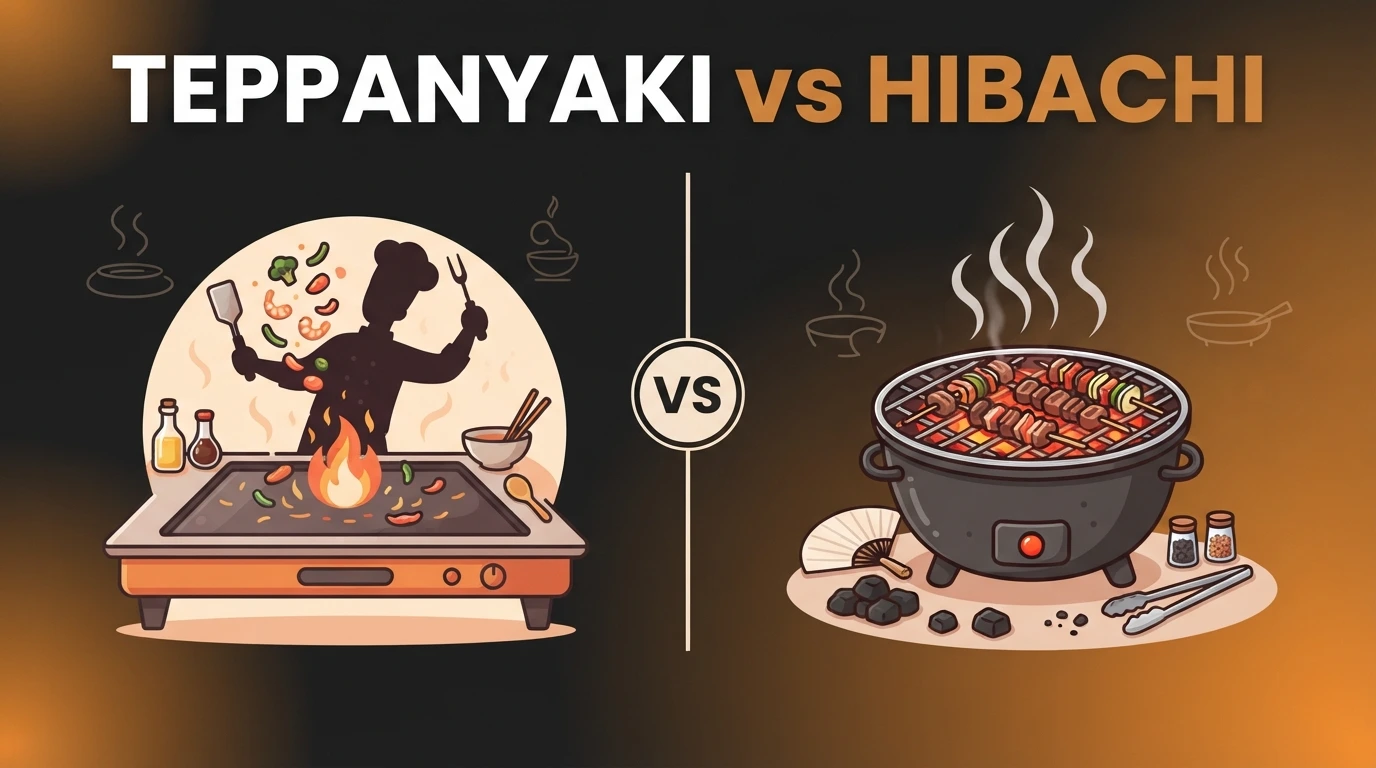
Teppanyaki uses a flat iron griddle and often comes with a chef’s show, like knife tricks and flaming onion volcanoes. Hibachi uses a small, open grill with a charcoal fire and a metal grate, with less performance. Most “hibachi” restaurants in the U.S., including Benihana, actually cook teppanyaki-style food.
📌 Key Takeaways
⟢ Teppanyaki cooks on a flat griddle. Hibachi cooks on an open grate over charcoal.
⟢ Most American “hibachi” restaurants really serve teppanyaki.
⟢ Teppanyaki started in Japan in 1945. Hibachi is centuries older.
⟢ Teppanyaki dinners usually cost more because of the show and wider menu.
⟢ Both styles are social and fun, but the cooking method and experience are different.
▪️▪️▪️▪️▪️▪️▪️▪️▪️▪️
What Is Teppanyaki?
Teppanyaki means “grilled on an iron plate.” The word “teppan” means iron plate, and “yaki” means grilled.
➤ This cooking style started at a Tokyo restaurant called Misono in 1945. It grew popular in the U.S. in the 1960s, when Benihana brought the tableside show to American diners.
A teppanyaki chef cooks on a large, flat steel griddle in front of you. The chef flips knives, stacks onion rings into a flaming volcano, and tosses food onto your plate.
The griddle can reach about 600°F, so food cooks fast and gets a light char.
Teppanyaki menus tend to be wide. You can usually pick from steak, chicken, shrimp, scallops, lobster, and vegetables, often with fried rice and a side of noodles.
▪️▪️▪️▪️▪️▪️▪️▪️▪️▪️
What Is Hibachi?
⚛ Hibachi is much older. The word means “fire bowl,” and it dates back to Japan’s Heian period, roughly 800 AD.
⚛ A traditional hibachi is a small, portable container filled with charcoal or wood. It was first used to heat rooms, then later fitted with a metal grate so people could cook on it too.
⚛ Real hibachi grilling happens over an open flame on that grate, not on a flat surface. The food sits closer to the heat, so it often picks up more smoky flavor.
⚛ Hibachi grills also run a bit cooler than teppanyaki griddles, usually around 450°F.
⚛ Hibachi menus are usually more limited than teppanyaki menus, with a shorter, set list of proteins and vegetables.
▪️▪️▪️▪️▪️▪️▪️▪️▪️▪️
Teppanyaki vs Hibachi: Side-by-Side Comparison
| Feature | Teppanyaki | Hibachi |
| Cooking surface | Flat iron griddle | Open grate over charcoal |
| Origin | Japan, 1945 | Japan, around 800 AD |
| Typical heat | Up to 600°F | Up to 450°F |
| Chef performance | High — knife tricks, flaming onion volcano | Lower-key, focused on the food |
| Menu variety | Wide (steak, seafood, sushi, noodles) | Narrower, set options |
| Typical price | Higher | Lower |
| Common U.S. example | Benihana, Kobe Steakhouse | Authentic Japanese hibachi (rare in the U.S.) |
▪️▪️▪️▪️▪️▪️▪️▪️▪️▪️
Why Americans Call Teppanyaki Restaurants “Hibachi”
Here’s the part most articles skip.
📍 1964 — Benihana opens in New York
It marketed its tableside cooking as a “hibachi dinner.” The name stuck, even though the cooking happens on a flat griddle, not an open grate.
🍽️ Today
So when someone in the U.S. says they’re “going to hibachi,” they usually mean a teppanyaki restaurant.
🔥 The real story
Real hibachi, the small charcoal grill style, is far less common at American restaurants. It’s technically a misnomer, but it’s now the standard way people talk about it.
▪️▪️▪️▪️▪️▪️▪️▪️▪️▪️
Taste and Menu Differences
♻ Same seasonings, different results
Both styles use similar seasonings, including soy sauce, garlic, ginger, and mirin. The taste difference comes mostly from the cooking method, not the sauce.
♻ Teppanyaki
Teppanyaki’s high, even heat gives food a light sear and a slightly crisp edge. Because chefs cook everything together on one surface, flavors can blend a bit, like when garlic butter from the steak touches the shrimp.
♻ Hibachi
Hibachi’s open flame adds a smokier taste, similar to grilling over charcoal at home. Since items cook on a grate instead of side by side on a flat top, flavors tend to stay more separate.
▪️▪️▪️▪️▪️▪️▪️▪️▪️▪️
Which One Is Healthier?
Neither style is unhealthy on its own. Both use lean proteins, fresh vegetables, and light sauces, and both can fit into a high-protein diet.
The biggest health factor is how much oil or butter the chef uses.
● Teppanyaki chefs often add butter for flavor and shine, which raises the fat and calorie count.
● Hibachi cooking typically uses less added fat, since the food cooks over an open flame instead of a buttered griddle.
➜ If you want a lighter meal at either type of restaurant, ask for less oil or butter and request sauce on the side.
▪️▪️▪️▪️▪️▪️▪️▪️▪️▪️
Price and Dining Experience
Teppanyaki dinners usually cost more, often $25 to $50 per person, because you’re paying for the entertainment and a bigger menu, including premium options like lobster or filet mignon.
Hibachi-style meals (in the true, traditional sense) tend to be simpler and cheaper, closer to $15 to $25 per person, since there’s less performance and a smaller menu.
Teppanyaki also suits a special occasion, like a birthday or date night, because of the show. Hibachi feels more casual and works well for a quick, satisfying dinner.
▪️▪️▪️▪️▪️▪️▪️▪️▪️▪️
Can You Cook Teppanyaki or Hibachi at Home?
Yes, and the equipment tells you which style you’re making.
✪ For teppanyaki at home:
Use a flat griddle or a large, flat cast-iron pan. Cook thin-sliced meat, shrimp, and vegetables in batches over high heat, and season with soy sauce, mirin, garlic, and ginger.
✪ For hibachi at home:
Use a small charcoal grill or a grill pan with ridges. Skewer or place food directly over the heat so it picks up that smokier flavor.
Either way, marinate your protein for at least an hour before cooking for the best flavor.
▪️▪️▪️▪️▪️▪️▪️▪️▪️▪️
Which One Should You Choose?
Pick teppanyaki if you want a show, a wider menu, and a special-occasion feel. Pick hibachi if you want a simpler, smokier meal at a lower price.
✔ Since most U.S. “hibachi” restaurants are really teppanyaki, you’ll likely get the tableside show either way.
The name on the menu matters less than what you actually want: entertainment and variety, or a quicker, more traditional grilled meal.
▪️▪️▪️▪️▪️▪️▪️▪️▪️▪️
People Also Ask
Q1: Is hibachi the same as teppanyaki?
🔎 No. Hibachi uses an open grate over charcoal, while teppanyaki uses a flat iron griddle. In the U.S., though, most “hibachi” restaurants actually serve teppanyaki-style food.
Q1: Which is healthier, hibachi or teppanyaki?
🔎 Both can be healthy. Hibachi often uses less butter and oil since it’s cooked over an open flame, while teppanyaki sometimes adds more butter for flavor.
Q1: Why do Americans call teppanyaki restaurants “hibachi”?
🔎 Benihana marketed its tableside teppanyaki cooking as “hibachi dinners” when it opened in the U.S. in the 1960s, and the name stuck.
Q1: Is teppanyaki more expensive than hibachi?
🔎 Usually, yes. Teppanyaki restaurants offer a bigger menu and more entertainment, which raises the price compared to simpler hibachi-style meals.
Q1: Can I cook hibachi or teppanyaki at home?
🔎 Yes. Use a flat griddle or cast-iron pan for teppanyaki, and a small charcoal grill or ridged grill pan for hibachi.
▪️▪️▪️▪️▪️▪️▪️▪️▪️▪️
Conclusion:
Teppanyaki and hibachi both bring Japanese cooking to life right at your table, but they’re not the same thing. Teppanyaki uses a flat iron griddle and a chef’s show, complete with knife tricks and a flaming onion volcano. Hibachi uses a small, open grill with a charcoal fire, giving food a smokier taste and a simpler presentation.
Most U.S. “hibachi” restaurants, including Benihana, actually serve teppanyaki-style food. That mix-up is common, so don’t worry about picking the “wrong” one by name.
Choose teppanyaki for a lively, special-occasion dinner with a bigger menu. Choose hibachi for a quicker, more traditional grilled meal. Either way, you’re getting fresh ingredients, bold flavors, and great entertainment.

I am a detail-oriented writer passionate about digital content creation.
I focus on producing clear, engaging, and reader-friendly articles.
I proudly contribute to dreamunionz.com as a committed content author.